The financial markets are living through one of the most uncertain periods in recent years. After months of strong rallies, global equities suddenly turned lower, with the S&P 500, Nasdaq, and other major indices experiencing sharp corrections. The trigger was not a single event but a combination of economic tension, trade conflicts, and market exhaustion.
For traders and investors, the final months of 2025 are not just another market phase. They represent a turning point where patience, understanding of macroeconomics, and tactical adaptation will separate winners from those who panic.
This article provides a complete overview of what is happening in the economy, why markets are reacting this way, and what traders can do now to navigate volatility and find real opportunities for reinvestment.
Understanding the Current Economic Situation :
The world economy at the end of 2025 is under pressure from several directions. Growth remains positive but slower, inflation is cooling yet uneven across regions, and policy uncertainty is once again at the center of financial markets.
1. The Trade War Impact :
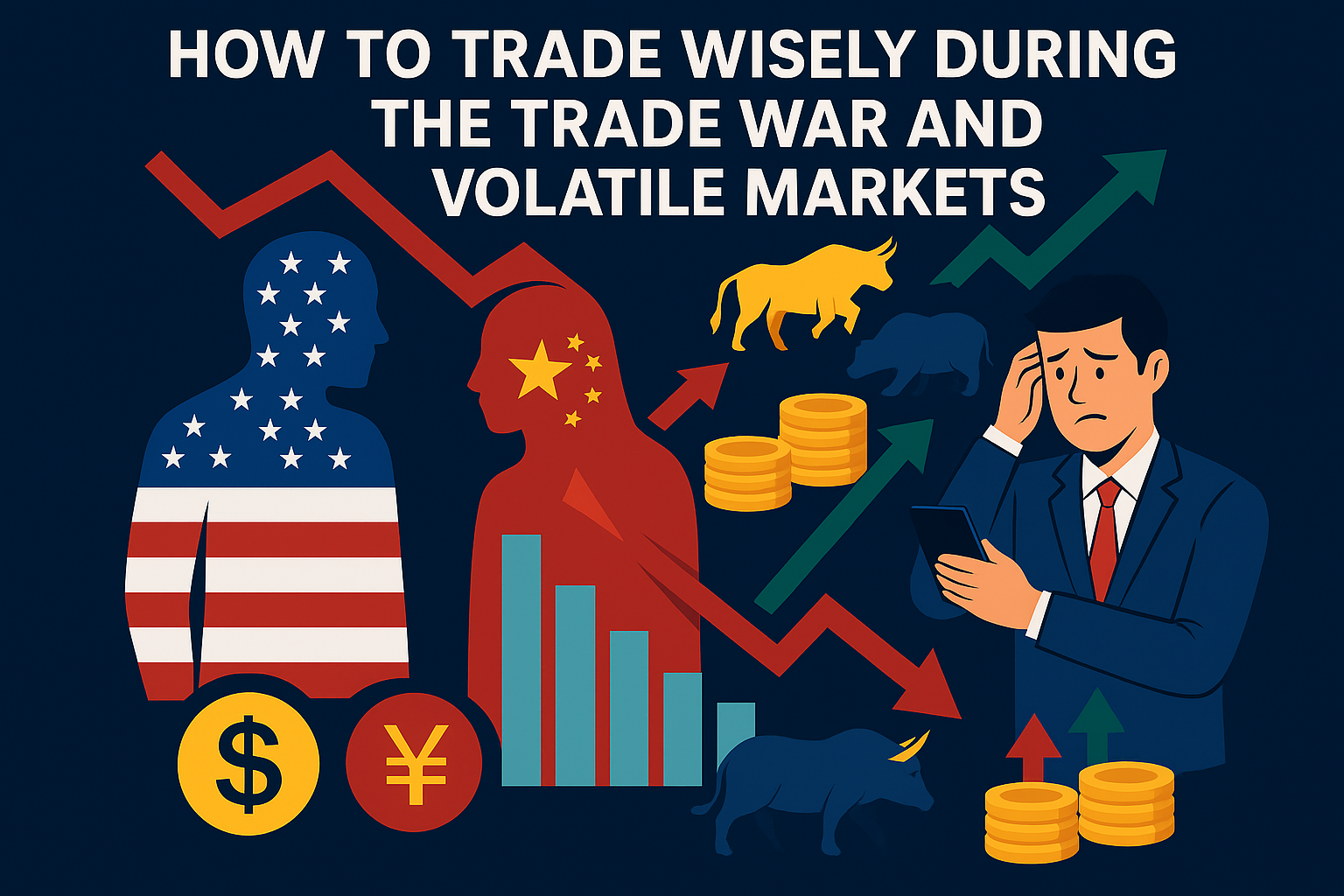
The renewed U.S.–China trade conflict is creating anxiety across the globe. The American government announced new tariff measures on Chinese goods, while China responded with restrictions on high-tech exports and new port fees on U.S. shipping. This tit-for-tat escalation directly affects large multinational companies, especially those in the technology, automotive, and manufacturing sectors.
For traders, this means that markets are repricing global risk. Every time a new tariff or restriction is announced, supply chains become less predictable, corporate margins shrink, and investors move toward safer assets.
The trade war does not only influence companies directly involved in exports. It also impacts commodity prices, currency movements, and investor confidence.
2. Slowing Global Growth :
Recent economic data show that several major economies, including the European Union and parts of Asia, are facing slower industrial production and weaker retail sales. Although the United States remains relatively strong, growth momentum has cooled compared to earlier this year.
This slowdown is important for traders because it changes the behavior of central banks and the flow of institutional money. When growth slows, central banks may delay interest rate cuts, while investors rotate from high-growth assets into more defensive sectors such as healthcare, consumer staples, and utilities.
3. The Federal Reserve and Interest Rates :
The Federal Reserve remains cautious. Inflation has decreased compared to 2024, but it still hovers slightly above the long-term target. The Fed prefers to keep rates stable until clear evidence of sustainable disinflation appears.
For traders, this means that liquidity will not expand quickly. Without strong monetary stimulus, the market must rely on genuine earnings growth rather than cheap borrowing. That is why many overvalued stocks have started to lose momentum.
4. Currency and Commodity Movements :
The U.S. dollar has become volatile as investors shift between risk and safety. A stronger dollar hurts emerging markets and commodity exporters, while a weaker dollar supports gold, oil, and cryptocurrencies.
Oil prices have recently stabilized after months of fluctuation, but the ongoing trade friction could reduce demand expectations for 2026. Gold, on the other hand, remains a strong hedge against uncertainty, showing consistent inflows whenever equity markets correct sharply.
How Traders Should React in This Environment :
When the market is turbulent, traders must adopt a mindset of flexibility rather than fear. Volatility is not a signal to stop trading; it is a signal to trade with structure and purpose.

1. Focus on Capital Preservation and Liquidity :
In uncertain periods, preserving capital is more important than chasing fast profits. Use smaller position sizes and set clear stop-loss levels. Keep a portion of your capital in cash or stable assets so you can react quickly when new opportunities appear.
Liquidity is a trader’s best ally during turbulent markets. Those who maintain flexibility can re-enter when prices stabilize, while over-leveraged traders are often forced out at the worst possible time.
2. Study Market Correlations :
In a trade war, correlations between asset classes change. Stocks and commodities often move in opposite directions. When equities drop, gold and bonds usually gain. The U.S. dollar tends to strengthen during market stress, while risk-sensitive currencies such as the Australian dollar and emerging market currencies weaken.
Understanding these relationships allows traders to diversify intelligently rather than simply holding multiple positions in the same direction.
3. Seek Value and Quality :
Not every stock or asset should be avoided. Many high-quality companies are now trading at lower valuations after the recent correction. This creates opportunity for long-term investors who are patient enough to wait for confirmation signals.
Focus on firms with strong balance sheets, consistent earnings, and exposure to resilient sectors. Healthcare, utilities, defense, and consumer staples are examples of areas that usually recover faster during economic slowdowns.
In the technology space, large-cap leaders like NVIDIA, Microsoft, and Apple remain fundamentally strong despite recent price drops. Their business models are still dominant, and once the macro tension cools, these names could lead the rebound.
4. Explore the Cryptocurrency Market Carefully :
Crypto markets often react differently from traditional equities. During risk-off moments, they can fall with stocks, but they also attract attention when investors search for alternatives.
Bitcoin and Ethereum have been consolidating, and many analysts see accumulation signs near their key technical zones. For traders, this means that diversified exposure to crypto could serve as a strategic hedge if global financial conditions remain tight but not catastrophic.
The key is to use proper position sizing and avoid overexposure to highly speculative tokens. Stick to established projects with liquidity and long-term adoption potential.
5. Use Volatility to Your Advantage :
Periods of uncertainty often bring exaggerated price movements. Professional traders exploit these swings with short-term technical setups that align with broader market direction.
Learn to identify zones of liquidity on the charts, where institutional buying or selling pressure is concentrated. When price tests these zones, it often provides clear trade setups with strong reward-to-risk ratios.
Volatility is not a threat to disciplined traders. It is an opportunity to trade more efficiently while others panic.
What to Expect as 2025 Comes to an End :

The next few months will be decisive for the global economy. The outcome of trade negotiations between the United States and China will shape market sentiment, but there are other forces at play.
If the trade war continues, inflation could rise slightly again due to higher import costs, forcing central banks to remain cautious. On the other hand, if some diplomatic progress is achieved, markets could see a relief rally, especially in the technology and industrial sectors.
Investors should also pay attention to corporate earnings reports. Many companies have already adjusted their forecasts, but if upcoming results show resilience, that could provide the foundation for a new rally into early 2026.
At the same time, the crypto market is entering a phase of potential reaccumulation. As traditional assets face headwinds, blockchain technology continues to attract institutional interest. Bitcoin halving effects from earlier this year may also start influencing supply dynamics in the coming months.
This intersection between traditional finance and digital assets could create one of the most interesting multi-asset opportunities in years.
Strategic Action Plan for Traders :

-
Stay informed but selective: Follow economic releases and geopolitical developments, but avoid reacting impulsively to every headline.
-
Reassess your portfolio: Shift focus toward value and quality while reducing exposure to highly speculative or over-leveraged positions.
-
Combine multiple timeframes: Use higher timeframes to identify key trends and shorter timeframes for tactical entries.
-
Maintain emotional discipline: Avoid revenge trading or overtrading after losses. Patience and structure always outperform emotion.
-
Prepare for the next cycle: Bear markets and trade tensions always end. The traders who study, analyze, and remain active will be the first to capture the next big rally.
Final Thoughts :
The trade war and current volatility are part of a larger economic cycle. They are not the end of the market but a recalibration. These moments test traders’ psychology, strategy, and ability to adapt.
Instead of running from uncertainty, focus on learning from it. Each correction refines your technical and emotional discipline. Each recovery rewards those who stayed prepared.

As 2025 closes, the best traders will not be those who predicted every headline, but those who built flexible systems, managed risk wisely, and positioned themselves early for the next wave of growth.
Stay patient, protect your capital, and watch for accumulation signals across equities and cryptocurrencies. The opportunities that emerge from this turbulence could define your success in 2026 and beyond.